
There is a moment, just before the needle goes in, when the body knows it is about to be rewritten.
The piercer’s gloved hands steady the tissue. The air smells of antiseptic and metal. A woman lies on a table that is not a medical table, yet the procedure carries the same quiet gravity. A breath is held. Then the sharp, clean pressure—neither purely pain nor purely sensation-and something that was closed becomes open. A channel is made. Jewelry is threaded through. The body is no longer exactly the same body that walked in.
For many women, this is the first time they have chosen to mark a part of themselves that culture has already heavily annotated. The nipple arrives pre-written: it is for milk, for the infant’s mouth, for the male gaze, for the soft maternal silhouette, for the algorithm that will still ban it if it is female. To put a needle through it is to insert a different sentence.
This is not a trend piece. It is an attempt to sit with what the act can mean when read through the lens of the feral: the refusal of domestication, the quiet or loud reclaiming of a body that was never supposed to answer only to itself.
The domesticated nipple
Women’s bodies have long been treated as sites of careful management. The breast, in particular, is asked to perform dual and often contradictory roles—erotic and reproductive, public and private, available and modest. The nipple sits at the center of this tension. It is the most charged square inch of skin on the female torso, the place where the double standard is most visible: male nipples may appear on magazine covers and Super Bowl stages; female ones are still routinely censored, sexualized, or reduced to their potential function.
The question that arrives almost immediately after a woman mentions her piercings-“Can you still breastfeed?”-is never neutral. It reveals the assumption that the body’s primary orientation remains toward a future child who may or may not exist. Autonomy is treated as provisional, something to be weighed against usefulness.
Feral feminism begins from the opposite premise. Domestication is the process by which the wild is made useful, predictable, and contained. Women have been domesticated in the classical sense: brought indoors, assigned reproductive and emotional labor, taught that their value lies in how well they serve the household, the partner, the species. To go feral is not to become animal in some romanticized way. It is to refuse the terms of that usefulness. It is to insist that the body can answer to its own desires, its own aesthetics, its own private logic.
A needle through the nipple is a small, permanent refusal of those terms.
A brief, contested history
The historical record on nipple piercing is thin and often unreliable. Stories circulate of late-medieval European courts where plunging necklines and jeweled rings on the breast were fashionable among the elite. Victorian-era letters published in the magazine Society describe “bosom rings” worn by fashionable women in Paris and London, said to keep the breasts in a state of constant excitation. Scholars have noted that some of these accounts may be erotic fantasy rather than documented practice. What matters less than perfect provenance is the recurring pattern: whenever the practice appears, it is framed as transgressive, as a rejection of the idea that the female breast exists primarily for nursing or modest display.
In the modern West the practice re-emerged in the late twentieth century through the leather and BDSM scenes, the modern primitive movement, and the work of figures such as Jim Ward and Fakir Musafar. What had been underground or subcultural gradually moved toward the visible. Celebrities wore them. Young women got them in increasing numbers. The reasons varied—erotic enhancement, aesthetic preference, identity signal, private confidence, reclamation after illness or trauma—but the underlying gesture remained consistent: the body was being marked according to its owner’s will rather than society’s script.
The feral reading
What makes the piercing feral is not that it is inherently radical. Plenty of piercings are purely decorative, purely erotic, purely about following a trend. The feral quality appears when the act is understood as a deliberate interruption of domestication.
The jewelry sits against the skin as a small declaration of ownership. It can be hidden under clothing, known only to the wearer and to those she chooses to show. Or it can flash under a thin shirt, a private code made briefly public. Either way, it alters the body’s relationship to itself. Sensation changes. The nipple becomes a place of deliberate feeling rather than passive function. The wearer must care for the site during healing, must decide when and how to reveal it, must live with the permanent channel that remains even if the jewelry is later removed. The body is no longer entirely the body that was given; it has been revised.
This is close to the heart of feral thought. Ferality is not wildness as spectacle. It is the state of having escaped or refused the enclosure. It can look quiet. It can look ordinary. A woman going about her day with metal through her nipples is not performing rebellion for an audience. She is simply living inside a body that has been claimed on different terms.
There is also the element of risk and irreversibility. Healing can be complicated. Infection is possible. Some people retire the piercings after years and are left with small scars or closed channels. The decision carries consequence. Feral acts often do. They are not optimized for safety or social ease. They accept the cost of self-determination.
Complications and limits
It would be dishonest to present nipple piercing as pure liberation. Body modification exists inside capitalism, inside beauty culture, inside the same systems that produce pressure to be desirable. Some women get the piercings because they have seen them on models or influencers and want to feel closer to that image. Some experience them as another demand on the body rather than a release from demand. Pain thresholds, economic access to skilled piercers, and cultural background all shape who can easily make the choice and who cannot.
There is also the critique, offered by certain radical feminists, that extensive body modification can reproduce the logic of self-harm or of treating the body as a project to be improved rather than a home to be inhabited. That critique deserves to be heard even if one ultimately disagrees with its conclusions. Not every hole is a refusal. Not every refusal is free of the very forces it claims to escape.
The feral position does not require purity. It requires attention. It asks what the gesture is doing in a particular life, at a particular moment. For one woman the piercing may be the first time she has overridden a lifetime of messages that her body exists for others. For another it may be continuous with a longer practice of marking, of ritual, of erotic self-knowledge. For a third it may later be retired without regret. The meaning is not fixed in the metal. It is negotiated in the living.
What remains
Years after the piercing, the jewelry may become ordinary. The initial charge fades. The body absorbs the modification the way it absorbs any long-term change. Yet something persists: the knowledge that a decision was made, that a boundary was crossed on the self’s own authority, that a part of the body once heavily scripted by others now carries a private signature.
This is the modest scale at which ferality often operates. Not the grand escape into the wilderness, but the smaller, more sustainable refusals that accumulate. The decision not to explain. The decision to keep the jewelry in even when it would be easier to take it out. The decision to treat sensation, ornament, and ownership as legitimate ends in themselves.
The needle does not make anyone free. Freedom is not delivered by hardware. But the needle can mark the place where a woman stopped waiting for permission. In a culture that still treats the female body as a resource to be managed, that mark is not trivial. It is a small, permanent record of the moment she chose to answer to herself.
That is enough.
Footnote
My body keeps its own quiet archive of chosen marks. I have facial piercings that refuse the smooth, expected surface. Both of my nipples are pierced and left occupied by metal. My navel is pierced. My genital sites are pierced and held open to sensation. And lower still, Rosebud jewellery keeps my anal area in a state of continuous, chosen occupation—neither hidden nor announced, simply present.
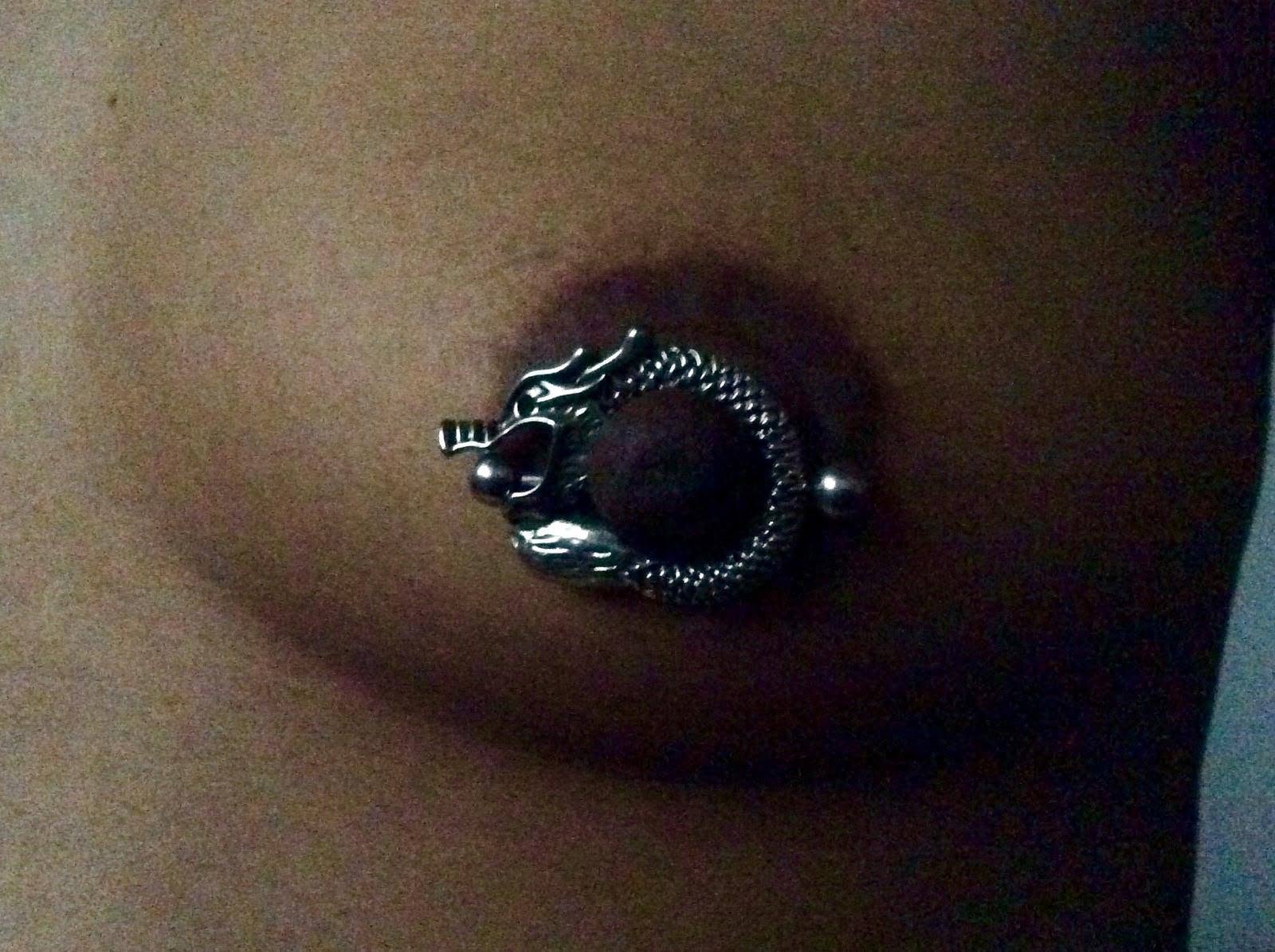
These are not illustrations added after the argument. They are the argument written in flesh, worn daily, and lived alongside an openly polyandrous and sexually sovereign life. The same refusal that put the needle through the nipple keeps the plug in place and the doors of desire unlocked.
Conversation
Comments