

In the dense forests of the southern lowlands, power did not always wear a human face. Sometimes it wore spots.
The jaguar moved through Classic Maya thought the way blood moved through the body: essential, dangerous, and never fully domesticated. It belonged to the night, to the caves that opened into the underworld, to the predatory intelligence that could see in darkness and strike without warning. When Maya artists and scribes placed jaguar attributes on a woman—ears, fangs, spotted pelts, the very title that linked her to war and the wild—they were not decorating her. They were announcing that she carried a force older and more dangerous than the city walls around her.
This is the territory of the jaguar women: the elite Maya rulers and ritual specialists who claimed, or were given, a share of that predatory power. Their stories survive in stone, in hieroglyphs, and in the quiet authority of tombs. They offer a different ancestral memory of the feminine—one that is not primarily nurturing, cyclical, or domestic, but political, transformative, and feral.
The First Recorded Queen
Lady Yohl Ik’nal of Palenque ruled in her own right from roughly 583 to 604 CE. She is the earliest securely documented female ajaw of a major Maya polity. For more than twenty years she held the highest title, commissioned monuments, and maintained the dynasty through a period of military pressure from neighboring powers. When she died, the succession passed through her bloodline, first to her daughter Lady Sak K’uk’ and eventually to the celebrated ruler K’inich Janaab’ Pakal.
Her reign is not an anomaly explained away by the absence of suitable men. It is evidence that the Maya political system, under certain conditions, could place a woman at the center of cosmic and earthly authority. The monuments do not show her as a temporary placeholder. They show her as ruler.
What the stones do not explicitly say, the larger symbolic world supplies. In Maya cosmology the ruler was the axis between the human community and the non-human forces that sustained it. Bloodletting, vision quests, and the assumption of animal or divine attributes were part of that role. A woman who sat on the throne therefore sat inside the same dangerous circuitry of power that men did. The jaguar was one of the most potent symbols available within that circuitry.

Imported Power and New Dynasties
At Naranjo, Lady Six Sky (Wak Chanil Ajaw) arrived as a foreign princess in the early seventh century and founded a new ruling line. The monuments that record her presence place her in positions of active authority. She is not merely the mother of a future king; she is a political actor who reestablished a dynasty after a period of collapse. Her story demonstrates another route to power: the strategic movement of elite women between cities, carrying bloodlines, titles, and ritual knowledge with them.
These movements were not soft diplomacy alone. They involved the transfer of legitimacy in a world where legitimacy was measured in part by the ability to communicate with gods and ancestors through blood and vision. The capacity to enter altered states, to host supernatural forces, and to return with authority was not gendered in any simple way. The jaguar, as a classic nagual or spirit companion form, belonged to that repertoire of transformation.
The Highest Title
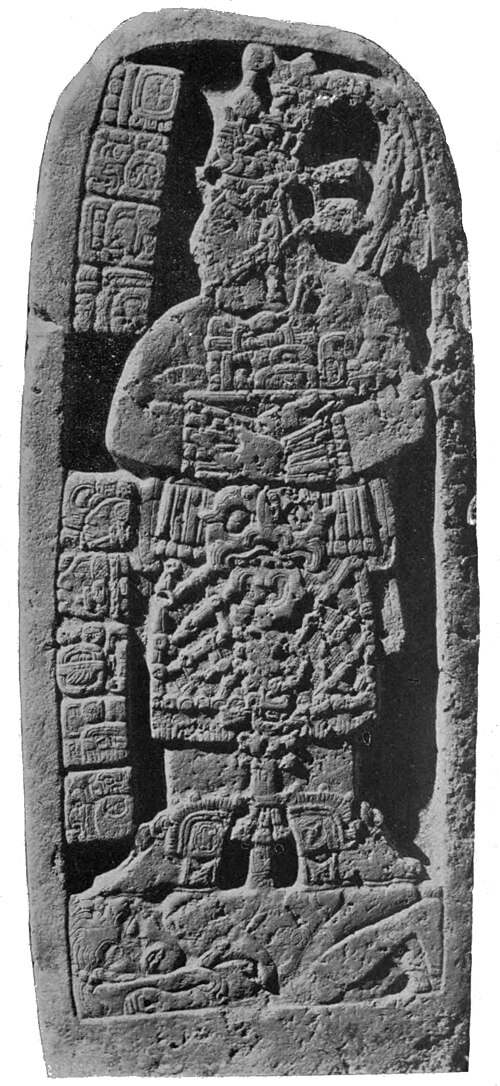
Perhaps the most striking example is Lady K’abel of El Perú-Waka’, who held the title Kaloomte’—a rank associated with the highest levels of military and political command, more often carried by men. Her tomb and the monuments associated with her present a woman who was not defined solely by marriage or motherhood. She was a power in her own right, buried with the signs of her rank.
When a woman carried a title linked to war and supreme authority, the jaguar imagery that often accompanied elite martial identity became available to her as well. The jaguar warrior was not exclusively male in the symbolic order. The animal’s association with night, the underworld, and predatory force could be claimed by anyone who had the rank and the ritual standing to bear it.
Shapeshifting as Political Fact
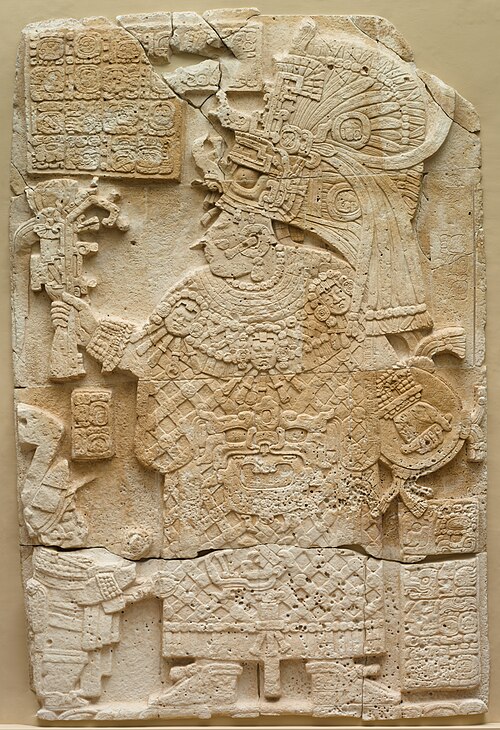
The idea of shapeshifting should not be reduced to modern fantasy. In Maya thought, the boundary between human and animal, ruler and spirit, was porous under the right conditions. Bloodletting opened the way. Visions allowed contact. Certain individuals were understood to have animal counterparts or the ability to move in non-ordinary ways. The jaguar was among the most powerful of those forms.
For a woman of high rank, this meant that her authority was not confined to the palace or the household. It extended into the forest, the night, and the places where the living met the dead. The city was never fully sealed against the jungle. The jungle was never fully outside the reach of those who knew how to speak its language of power.
This is the feral quality that survives in the record: not wildness as chaos, but wildness as a form of intelligence and force that the political order needed and therefore had to incorporate. The jaguar women did not reject the throne. They occupied it while remaining connected to something older and less controllable than the throne.
Against the Domesticated Reading
Later colonial accounts and much of the early modern scholarship preferred to see Mesoamerican women primarily as wives, mothers, and victims of a violent sacrificial system. The hieroglyphic and archaeological evidence complicates that picture. Women ruled. Women held war-related titles. Women participated in the same blood rituals that sustained cosmic order. Women were buried with the symbols of predatory power.
None of this makes the Classic Maya world a feminist utopia. It was hierarchical, often brutal, and structured by intense competition between city-states. The power these women held was real, but it was elite power, exercised within systems of sacrifice and warfare. The point is not to romanticize them into modern heroines. The point is to refuse the smaller story that has been told about them.
The feral feminine in this context is not the rejection of power. It is the refusal to make power tame. It is the insistence that authority can wear spots, can move through darkness, can belong to a woman without first being softened into caretaking alone.
The Living Charge
What remains is an ancestral image that still carries voltage: a woman seated on a stone throne while the forest presses in around her, carrying the attributes of the animal that owns the night. She is not outside the political order. She is one of its most concentrated expressions. She bleeds, she rules, she transforms. She does not ask permission from a softer definition of the feminine.
For a magazine devoted to the feral voice, these jaguar women offer a root rather than a fantasy. They remind us that the untamed is not always found in the wilderness beyond the walls. Sometimes it sat on the throne itself, wearing the face of the forest, and ruled.
Conversation
Comments